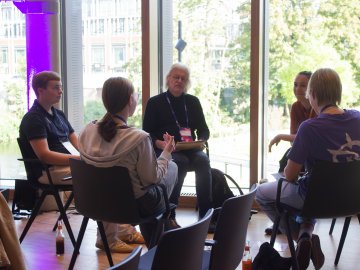
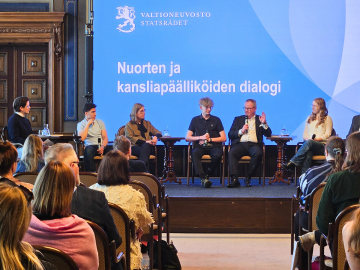
City of Helsinki employees and decision-makers also took part in the discussion. Notes from the event will be compiled and shared with relevant authorities and decision-makers to help inform service development.
The discussion was organised by Hospital, Rehabilitation and Care Services in collaboration with the Ministry of Justice and the Timeout Foundation.
Read the original article on the City of Helsinki’s website.
Participants shared their experiences of Swedish-language services
The discussion covered both positive and negative experiences of receiving services in Swedish. Some participants said that proximity to services was more important to them than the language of service, while others emphasised the importance of being able to receive care in Swedish. Participants shared personal experiences from various services.
The centralisation of health care services was also a key topic. Some saw it as a positive development, as it allows them to access comprehensive care in one location. Others expressed concern that the distance to service points had become too long.
Looking ahead: future services and technological solutions
Participants noted that health and social services are constantly evolving, and it can be difficult to stay informed about how services work in their local area. Some expressed concern about the future and what life might be like as they grow older.
The group also discussed the potential of AI and other technological solutions. One participant highlighted that technology could support communication between people with different mother tongues. The ongoing staff shortage in the health and social services sector was also raised, with many wondering whether there will be enough Swedish-speaking staff in the future.
To conclude the event, participants were invited to share any reflections sparked by the discussion. Several commented that the discussion had been valuable and expressed a wish for similar events to be held more regularly.
It was a pleasure to invite Swedish-speaking pensioners to take part in a confidential discussion. Listening to service users is a vital part of planning and developing services. They have valuable perspectives and ideas. It’s equally important to gather feedback and hear about their experiences with existing services,” says Pia-Maria Grönqvist, project planner and one of the discussion’s organisers.