CKA is a Hungarian organisation working to strengthen civic participation and civil society. The partnership aims to support the use of the Timeout method in CKA’s own activities and networks, while also building the capacity of local organisations and facilitators to organise and facilitate Timeout dialogues. The partnership is rooted in CKA’s view that there is a need in Hungary for new ways to bring people from different backgrounds and with different perspectives together.
I see the Timeout method as a way to bring people from different backgrounds and with different political views together, foster dialogue, and build trust and strengthen democracy. In Hungary, there is a need for spaces where people can engage in constructive dialogue and discuss the future of society”, says Mónika Bálint, Executive Director of CKA
The need for dialogue in a changing society
Hungary has experienced a period of strong political polarisation in recent years. The parliamentary elections in April 2026 marked a significant political shift in the country, but strengthening social trust and democratic institutions requires long-term work.
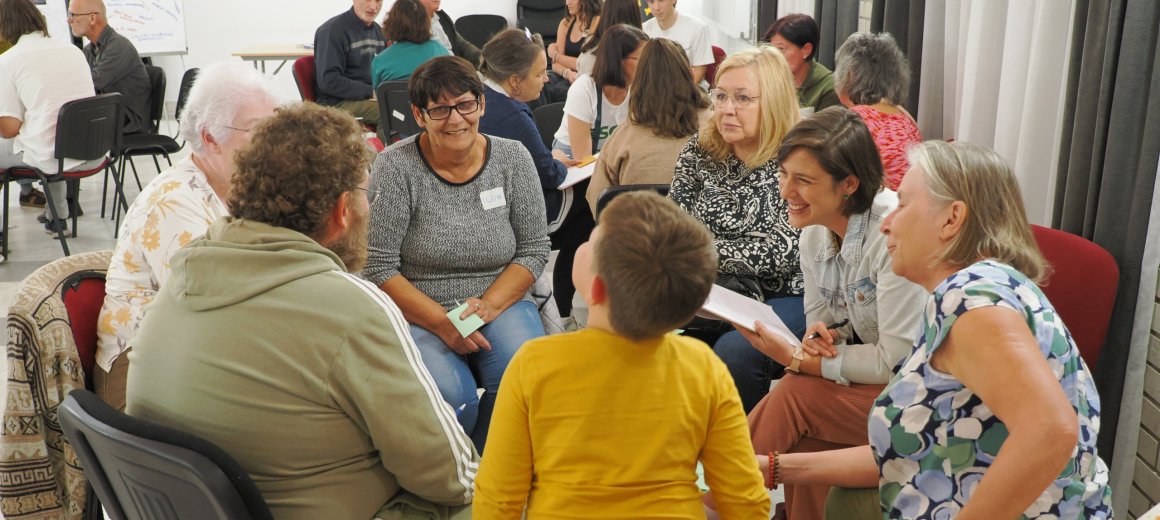
CKA aims to create space for constructive dialogue where people can listen to one another, share experiences and gain a deeper understanding of different perspectives.
Together with its partners, CKA plans to use the Timeout method to address issues that are important and relevant to local communities. Planned dialogues will explore topics such as life in local communities, environmental issues and questions that affect people’s everyday lives, including access to and use of water.
We want to organise dialogues in small communities about issues that are important to people themselves. We believe this can help build trust and bring different people together,” Bálint says
The Timeout Foundation supports CKA in adopting the method by providing expertise, guidance and practical support. The partnership includes supporting facilitators and trainers, developing materials and sharing experiences. At the same time, the partnership gives the Timeout Foundation an opportunity to learn how the method can be adapted to the Hungarian context.
Timeout materials now available in Hungarian
As part of the partnership, a selection of Timeout materials has been translated into Hungarian. The materials give Hungarian-speaking facilitators and participants practical tools for organising and facilitating constructive dialogue.
Explore the Timeout materials in Hungarian and organise your own Timeout dialogue.
The Timeout Foundation would like to thank CKA for the fruitful cooperation and its important work in making the Timeout method available to Hungarian-speaking facilitators and participants.
What is the Timeout Foundation?
Together with others working to promote dialogue, the Timeout Foundation aims to make the conversation culture more constructive, reduce societal polarisation and increase people’s participation in society. Timeout dialogues help build better everyday lives, a better society and a better world.