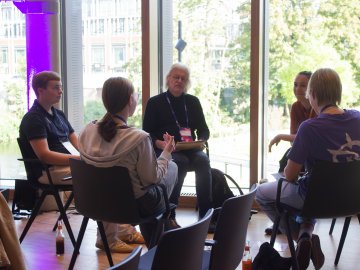
The inclusion pilot consisted of a nationwide survey, which received responses from nearly 17,000 children and young people, as well as Timeout Dialogues organised on the basis of the survey results. In the dialogues, children and young people had the opportunity to deepen conversations on societal themes that had emerged in the survey. Altogether, 11 Timeout Dialogues were held with a total of 134 young participants. The dialogues were organised in cooperation with the Timeout Foundation.
The survey and dialogues explored the same themes that ministries’ permanent secretaries have identified as key societal challenges for Finland’s future. These included issues related to safety and security and trust.
The Timeout Dialogues supported decision-making by bringing forward young people’s experiences and perspectives in their own words. Through dialogue, the information gathered through surveys could be explored more deeply and examined calmly from different viewpoints. The information collected in the pilot will also be used more broadly within public administration as the permanent secretaries formulate their shared views on the most important policy challenges of the next parliamentary terms.
According to the report, the message from children and young people to the next government is clear: climate change, mental health, everyday safety, inequality and opportunities for participation must be addressed with long-term commitment. The inclusion pilot also demonstrates that there is a clear need to hear the views of children and young people, and that their perspectives strengthen both the knowledge base for decision-making and trust in society and democracy.
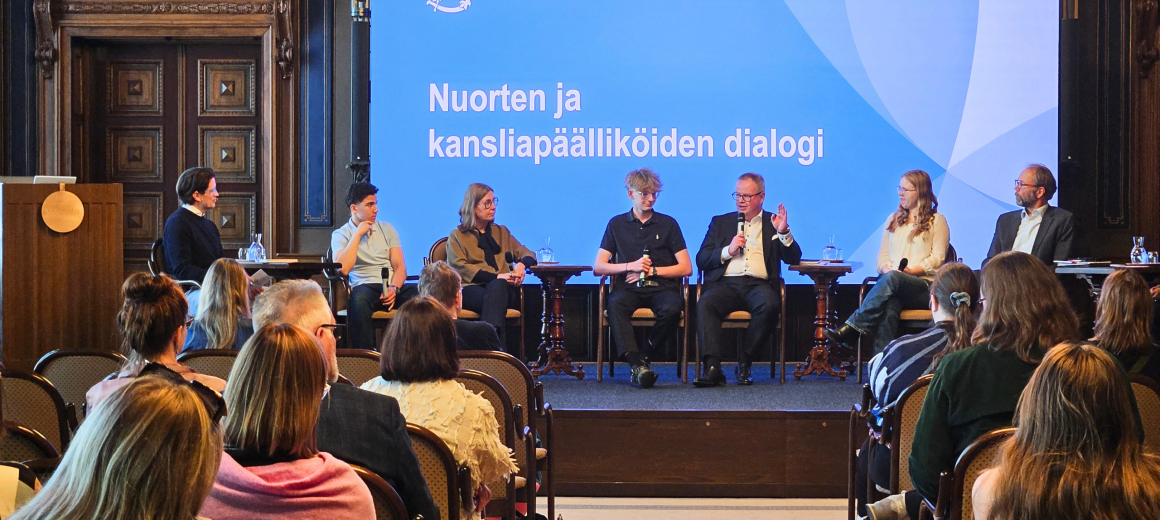
The main significance of the inclusion pilot lies not only in the material collected, but in the way children’s and young people’s experiences have been connected to preparation work,” commented State Secretary Risto Artjoki in his speech at the publication event
You can explore the publication here (in finnish).
Timeout Dialogues deepened the themes raised in the survey
According to Laura Salovaara, Planning Officer for the National Child Strategy, the dialogues complemented the information gathered through the survey in an important way. In her view, online surveys can gather many responses, but the information may remain superficial. Dialogues allow participants to take time to explore a topic in depth and thus generate valuable qualitative insights. Salovaara also emphasises that dialogue itself is important:
In online discussions, extremes are often emphasised, whereas face-to-face conversations naturally – with the support of the method and the facilitator – seek common ground and help people understand that issues are rarely black and white.”
According to Laura, the dialogues also revealed important insights into the realities children and young people are currently living in. Many participants said it was reassuring to notice that others were thinking about the same issues. She noted that the young participants were skilled discussants and capable of disagreeing constructively. Salovaara also praised the facilitation and organisation of the dialogues:
The Timeout Foundation experts are highly professional. Participating in the dialogues as a note-taker taught me more about the method and dialogue skills than any training course could.”
Dialogue strengthens participation and democratic skills
The Timeout method provides a way to have constructive and equal conversations even when discussing broad societal issues. Dialogues with children and young people also strengthen democratic skills, listening abilities and experiences of participation.
Children and young people are often still learning listening and discussion skills, and it is our responsibility as adults to create encouraging spaces for this. One dialogue can already be a meaningful experience for a child or young person, but democratic skills are strengthened through repeated experiences of discussion,” says Valtteri Tervala, Specialist at the Timeout Foundation
The inclusion pilot supports the implementation of children’s rights as well as the National Child Strategy, the National Democracy Programme and the National Youth Work and Youth Policy Programme. The perspectives raised by children and young people in the pilot were published almost simultaneously with the permanent secretaries’ key messages to ensure that young people’s voices would be included in the preparation of the next government term.
The inclusion pilot was coordinated by the National Child Strategy in cooperation with the Prime Minister’s Office, the Ministry of Justice, the Ministry of Education and Culture and the Ministry of Finance. Motiva Oy supported the practical implementation of the pilot and was responsible for conducting and analysing the survey. The Timeout Dialogues of the inclusion pilot were organised in cooperation with the Timeout Foundation.
What is the Timeout Foundation?
The purpose of the Timeout Foundation is to work together with other actors interested in dialogue to make discussion culture in Finland more constructive, reduce societal polarisation and strengthen people’s inclusion in society. Through Timeout Dialogues, the aim is to build a better everyday life, society and world.