What is the point in having a dialogue when there is no escalated conflict? What is the point of discussing topics among people who do not necessarily seem to hold starkly differing opinions—at least not in the public eye? Who should really engage in dialogue, and about what?
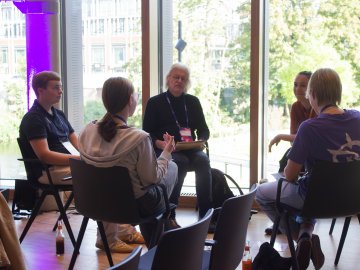
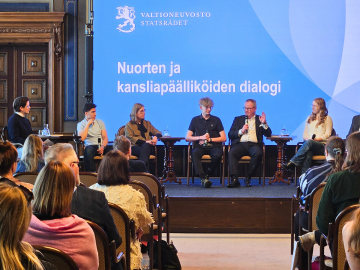
A group of sixteen young people from different parts of Europe attended a summit in Riga to take on a topic no less significant than “En:countering divides – Bridging differences: Understanding through dialogue”. Describing that group with a single word would not do them justice. But if you had to choose one, it would be inspiring. Okay let us add another one – resilient. Considering the nature and the theme of the event, it may not come as a surprise that this group could be described with such words – only in their most positive sense.
But how come these two words? Well, that has everything to do with what took place and more importantly what was learned during the three workshop days. The days were intense, filled with theory, practice, and a significant amount of group work. Participants took on various tasks, from facilitating dialogues to planning and presenting them—covering topics such as radicalization and extremism, civic engagement, corruption, polarization, media, and accountability within democratic governance, to name a few. Not only did they embrace the work, but they succeeded in applying recently learned theories directly to practice. One cannot help but feel inspired by the resilience they demonstrated – staying committed while maintaining open and curious minds.
However as much as the aforementioned is all true, there is more to the story of how the words inspiring and resilient came to mind. These sixteen young people came from 14 different countries and were foreign to one another before the workshop. Some came from big world-renowned European cities, while others had lived their whole lives in rural areas. Ways of expressing oneself, discussion culture one is used to, the impact of different historical events on one’s culture, the current political climate in one’s country… The list goes on, but it is fair to say that these alone are – depending on the context – some of the differences that we often refer to when describing divides.
From one perspective, the workshop days might have seemed like a recipe for conflict. From another, they were an opportunity to learn with and from others about a shared interest. Big topics were being discussed by participants living in and experiencing different realities shaped by varied environments and histories. From a workshop moderator’s point of view the group was in many ways the epitome of what they were striving to understand and learn more about.
Understanding was built. Cohesion was built. Trust was built. Resilience was built. And that was very inspiring.
Dialogue gives us an opportunity to learn – not only about each other, but about ourselves and the world around us. Dialogue allows us to value connection and nurture peace in peaceful times.
Three tips regarding organizing a dialogue:
- Think about who does the topic concern but who does not normally participate in the discussion? Who are the silent voices regarding the topic?
- Not every dialogue needs to be a challenging one. Ask yourself which is more important, the fact that people who are perceived as the polar opposites of one another regarding a certain topic come and discuss the topic that divides them the most OR that the same people discuss, period?
- When organizing a dialogue, make sure that all participants are ready to commit to having a dialogue where the goal is to gain a deeper understanding, not an argument focused on “winning.”
Written by Efe Evwaraye