The number of court cases related to climate change has rapidly increased all over the world, and has rapidly become a way to support climate action. Because of its novelty, much remains to be explored regarding our understanding of the role of litigation and its links to climate activism.
How can activism and litigation come together to promote more democratic climate governance? How can climate litigation be supported by activism outside the courtroom? What tools can research provide to support climate activists and/or litigants?
Who would we like to see in the event? This event aims to bring together the worlds of research and civil society to find ways to work together towards climate action. If you see yourself as a researcher, litigator, activist or civil society worker then this dialogue event is for you.
When? May 17th, 2024 12:00 – 15:00
Where? Join us in Puistokatu 4, Helsinki
To better prepare for the event, we ask to register here.
Read more about the event here.
Programme
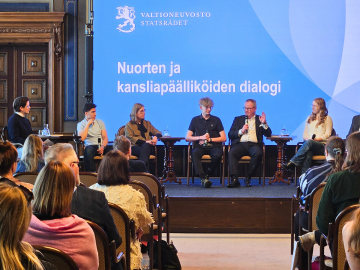
12.00-13.30 Hyperlocal dialogue between Ireland, Finland, Italy & the UK: “Supporting climate action through activism and litigation“
Speakers introducing the topic:
- from Helsinki: Kati Kulovesi (University of Eastern Finland)
- from Trento: Louisa Rosemary Parks (University of Trento)
- from London: Joana Setzer (London School of Economics)
All attendees are invited to join the hyperlocal dialogue with the speakers! The dialogue will be held in English.
13.30-13.50 Break
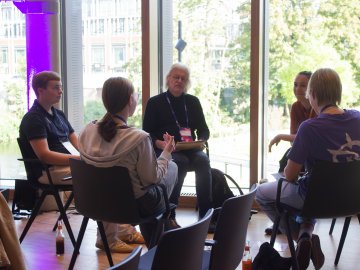
13.50-15.00 Local Timeout dialogue: how can civil society and research work together for climate action?
All Helsinki attendees are invited to share their experiences of working towards climate action. The Local Timeout dialogue will cover the following questions:
- How does my work (as a citizen/in civil society/climate litigation/researcher) support sustainable climate transitions?
- What are our experiences of working together with actors from different sectors?
- What opportunities and challenges have we experienced when researchers and civil society work together?
- What can researchers provide to civil society? And vice versa?
Hyperlocal dialogue
The hyperlocal dialogue brings together citizens from Finland, Ireland, UK and Italy into a joint virtual discussion room, allowing you to engage in a pan-European dialogue.
The discussion is part of Hybrid European Democracy Festival, a discussion festival taking place on 17-18 May 2024 from 15 locations all over Europe.
Organisers
This event is co-organised by Timeout Foundation, the University of Eastern Finland and 2035Legitimacy project.
Retool: Strengthening democratic governance for climate transitions
This event introduces RETOOL, a new Horizon Europe project which aims to advance our understanding of how to address the twin challenges of responding to the climate imperative while strengthening and reinvigorating democratic governance.